
How to Winterize a Swimming Pool in Seven Steps
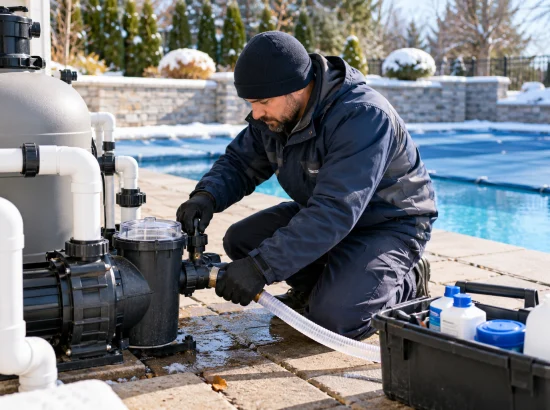
Winter is coming! Follow these simple tips to make sure that your inground swimming pool is kept in tip-top condition all winter long so that you can better enjoy it in the warmer months. At RIPL, common questions we hear from DIYers about winterizing a pool are: when should I start the process, how much time does it take, and why does it need to be done? While there are many factors to consider, we generally recommend allowing yourself a week to properly winterize your pool. And we recommend starting the process when the outside temperature stays below 65 degrees consistently.
Winterizing your pool is an important part of maintaining it. Your pool could become damaged if you don’t properly close it up for the winter months. Pool winterization can be a daunting task to take on, but we’ve broken it down for you into seven steps:
Step 1: Remove Any Pool Accessories
Most pools will feature some sort of accessories, such as ladders, heaters, and toys. When you remove them as part of the pool winterization process, make sure to rinse them off with water or clean them if necessary. You won’t want to store these items if they’re dirty as they could become damaged. Allow them to dry before storing them in your shed or pool house.
Step 2: Clean Your Pool
Before closing up your pool for the winter season, it needs to be clean. A few things to make sure you complete: Clean out the filters, remove any debris such as leaves and twigs, and clean the sides and bottom thoroughly with a pool vacuum. The cleaner your pool is when you winterize it, the easier it will be to open it back up for the season!
Step 3: Adjust and Balance the Water Chemistry
Your pool water contains delicate water chemistry that must be balanced. A week before you winterize it, make sure that the chemicals are balanced. The team at your local RIPL store can help guide you on products and proper dosage.
Step 4: Lower The Water Level
Since you won’t be using your pool for months at a time, you don’t need to worry about keeping the water levels high. Generally speaking, we recommend lowering the water to about a foot below the skimmer for the best results. The exact level will differ depending on what type of pool cover you’re using.
Step 5: Drain The Equipment
An important step in properly winterizing your inground swimming pool is taking the time to completely drain your pool equipment, including heaters, filters, and pumps. If you skip this step, you could severely damage pool equipment, as any water left inside expands when it freezes, which can cause irreparable damage. If you need professional support, our certified technicians are trained and experienced in pool winterization and can help ensure that your equipment remains safe.
Step 6: Add Bacteria-Killing Chemicals
Use pool shock and algaecide to get rid of any bacteria and algae before you cover your pool for the winter. Your local RIPL store not only carries these products, but our team provides honest advisory support to ensure you are getting the right products and understand the proper dosage and application methods.
Step 7: Cover Your Pool
The last step to learning how to winterize a pool is to cover it up and say bye-bye until next season! There are two types of pool covers that you can use in the winter: safety covers and winter covers. We typically recommend that you opt for a safety cover as they are the most secure. They will protect your pool from the elements, debris, and people or animals who may walk on it by mistake. Using the pool cover of your choosing, cover it and secure it tightly.
Follow these steps and your pool will be ready to take on the winter months. Our team is here to support you, or we can handle your complete pool winterization from start to finish so you can relax and have peace of mind that your pool will be ready for next season.
Need help with the pool winterization process?
Contact Us TodayFrequently Asked Questions
Why do I need to winterize my pool?
Pool winterization helps prevent freezing, protects equipment, slows growth of algae and bacteria, and also helps you get the pool ready faster for next season.
When should I start the pool winterizing process?
You’ll want to winterize your pool when the outside temperature stays consistently below 65 degrees F.
How much time does winterizing my pool take?
For do-it-yourselfers, the pool winterization process usually takes about a week.